
DFM & Injection Mold Design Services
Our injection mold design services assess part manufacturability, validate tooling feasibility, and optimize gate, runner, and cooling design through mold flow analysis, before any tooling investment is committed.
Model loading
Our DFM and mold design
From CAD review to cavity layout, every plastic injection mold design goes through a documented DFM and mold flow review under our ISO 9001:2015 certified quality system.
Every design is reviewed, simulated, and signed off by our engineers, so your first trial runs as planned.
- ISO 9001:2015 Certified
- Mold Flow Validated
- In-House Design & Tooling
- Prototype to Production
What Is DFM?
Design for Manufacturing (DFM) is the review of a part design to confirm it can be molded reliably and at the right cost before any tool is made. Wall thickness, draft angles, ribs, undercuts, and gate locations are checked in CAD, and issues are flagged with recommended fixes. Once the part is moldable, the mold design is developed and validated with mold flow analysis, then signed off before tool manufacturing begins.
What We Offer
Each plastic mold design project moves through moldability analysis, mold flow validation, and cavity layout planning, with a clear report at every stage.
DFM & Moldability Analysis
Wall thickness, draft, ribs, and undercuts are reviewed as part of plastic part DFM, with a DFM report and fix recommendations.
Mold Flow Analysis
Our mold flow analysis services simulate fill, weld lines, and warpage, with results shared in a mold flow report.
Tooling Feasibility & Cavity Layout
Cavity count and layout are planned to balance tooling cost, cycle time, and precision.
Gate, Runner & Cooling Optimization
Gate, runner, and cooling paths are engineered for consistent fill and stable cycle times.
3D Mold Design & Sign-off
The full mold design is developed in CAD, with gating, cooling, and ejection systems, and signed off before tooling begins.
NDA-Protected Reviews
Every CAD file and drawing is handled under NDA, with DFM feedback included.
Product Details
- Software


| Parameters | Metric | Imperial |
|---|---|---|
| Max Tool Weight | 2,000 kg | 4,409 lb |
| Facility Area | 1,486 sq. m | 16,000 sq. ft |
| VMC Travel (largest) | 1300 × 700 × 700 mm | 51.2 × 27.6 × 27.6 in |
| EDM Travel (largest) | 450 × 300 × 350 mm | 17.7 × 11.8 × 13.8 in |
| Wire EDM Travel | 400 × 300 × 255 mm | 15.7 × 11.8 × 10.0 in |
| EOT Crane Capacity | 3 tons | 3.3 tons |
Our Process
Design Intake
We review your CAD file, material choice, and production volume.
DFM Review
Wall thickness, draft angles, ribs, and undercuts are checked and flagged for changes.
Cavity & Parting Line
Cavity count and parting line are set based on production volume and part geometry.
Gate & Cooling Design
Gate, runner, and cooling channels are laid out for balanced fill and even cooling.
Mold Flow Analysis
Fill, weld line, and warpage behavior are simulated to validate the layout before tooling.
Mold Design Sign-off
The final mold design is shared with you for review and approval before any steel is machined.
Tool Manufacturing
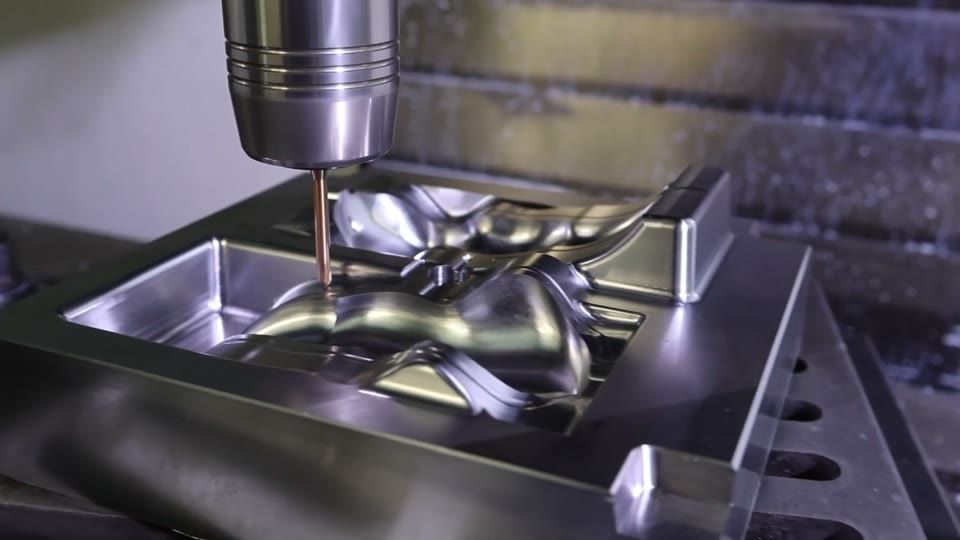
The approved design is machined in-house as a prototype or production tool.
Trial & Sample Approval
T0/T1 trials are run, and samples are inspected before sign-off.
What Our Clients Say
We came to Radiant with just a rough concept. Their team caught two design issues before we even cut steel, which saved us a full redesign cycle later. The mold ran clean on the first trial.
 Arjun RameshHead of Product Engineering, automotive components
What stood out was having design and manufacturing under one roof. No back-and-forth between vendors, no surprises at production. Parts shipped exactly on the date we were quoted.
 Michael ReedOperations Director, industrial equipment
Industries
Where DFM pays off
Injection mold design / 2026
We work with a diverse range of industries, providing tailored solutions for design, prototyping and manufacturing needs.
View more projectsFrequently Asked Questions
When should I get a DFM review?
Before you finalize your design or request tooling quotes. Catching issues at this stage costs far less than modifying a machined tool.
What's the difference between prototype tooling and production tooling?
Prototype tooling is built for early trials and low volumes, usually in aluminum or soft steel like P20. Production tooling is built in hardened steel like H13 or S136 for long, high-volume runs.
What does a DFM report include?
It lists issues with wall thickness, draft, ribs, and undercuts, with a recommended fix for each, before any tooling begins.
Why is mold flow analysis important?
Mold flow analysis simulates how plastic fills the cavity, so fill patterns, weld lines, and warpage risks are identified before any tool is machined.
Are DFM and tooling services handled in-house?
Yes. Injection molding design is done in SolidWorks and Cimatron, and tools are machined in our own facility.